
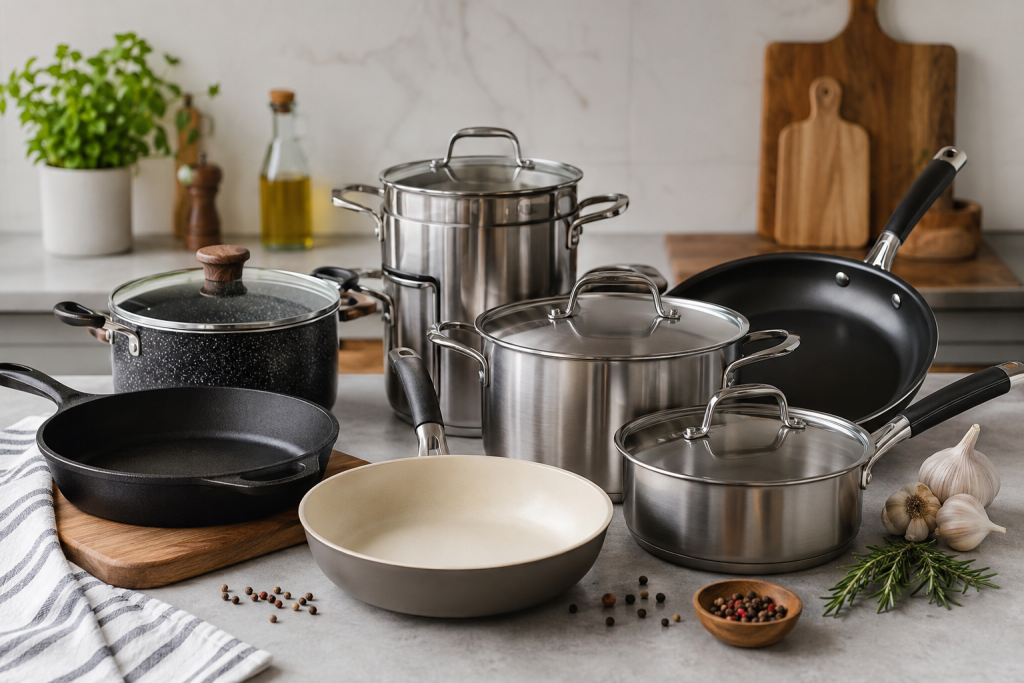
Whether you’re preparing a quick weekday breakfast or a gourmet dinner, the cookware you use has a significant impact on your cooking experience and the quality of your meals. High-quality cookware provides better heat distribution, improves cooking performance, and lasts for years with proper care. With so many materials, coatings, and designs available, choosing the right cookware can feel overwhelming. This guide will help you understand what to look for and how to build a cookware collection that meets your everyday cooking needs.
Why Quality Cookware Matters
Investing in premium cookware isn’t just about appearance—it’s about performance. Well-made pots and pans heat evenly, reduce hot spots that can burn food, and maintain consistent temperatures throughout cooking. They are also more durable, making them a better long-term investment than inexpensive alternatives that may warp, scratch, or lose their non-stick properties quickly.
Quality cookware also makes cooking more enjoyable by offering better balance, comfortable handles, and improved safety features.
Popular Cookware Materials
Stainless Steel
Stainless steel is one of the most versatile choices for any kitchen. It is durable, resistant to rust, and doesn’t react with acidic foods. High-quality stainless steel cookware often features an aluminum or copper core that improves heat conductivity.
Best for:
- Searing meat
- Browning vegetables
- Making sauces
- Everyday cooking
Non-Stick
Non-stick cookware is ideal for foods that tend to stick, such as eggs, pancakes, and delicate fish. It also requires less oil, making cooking and cleanup easier.
Best for:
- Breakfast dishes
- Low-fat cooking
- Quick cleanup
Cast Iron
Cast iron retains heat exceptionally well and can go from stovetop to oven with ease. While heavier than other options, it develops a natural non-stick surface over time when properly seasoned.
Best for:
- Steaks
- Roasting
- Baking
- Slow cooking
Ceramic
Ceramic-coated cookware offers a naturally slick cooking surface without traditional non-stick coatings. It heats evenly and is often appreciated for its modern appearance.
Best for:
- Gentle cooking
- Vegetables
- Light sautéing
Features to Look For
When shopping for cookware, pay attention to more than just the material.
Even Heat Distribution
Choose cookware with thick, multi-layer construction that spreads heat evenly across the cooking surface. This helps eliminate hot spots and ensures consistent results.
Comfortable Handles
Ergonomic, securely attached handles improve safety and make cookware easier to lift, even when full.
Oven Compatibility
If you enjoy recipes that begin on the stovetop and finish in the oven, check the cookware’s maximum oven-safe temperature.
Lid Quality
Well-fitting lids help retain moisture and heat, improving cooking efficiency while reducing energy use.
Compatibility with Your Stove
Not every pan works on every cooktop. If you have an induction stove, ensure your cookware is induction-compatible.
Building a Practical Cookware Collection
Instead of buying a large set immediately, focus on versatile essentials.
A balanced cookware collection should include:
- An 8-inch non-stick frying pan
- A 10 or 12-inch stainless steel skillet
- A medium saucepan with a lid
- A large stockpot
- A sauté pan
- A cast iron skillet for high-heat cooking
These pieces can handle the majority of everyday recipes while giving you flexibility for different cooking techniques.
Caring for Your Cookware
Proper maintenance extends the lifespan of your cookware.
- Wash cookware according to the manufacturer’s recommendations.
- Avoid overheating empty pans.
- Use wooden or silicone utensils when appropriate.
- Store cookware carefully to prevent scratches.
- Dry cookware thoroughly before storing to prevent water spots or rust.
Taking a few extra minutes to care for your cookware can keep it performing like new for many years.
Common Mistakes to Avoid
Many people purchase cookware based solely on appearance or price. Instead, focus on construction quality, material, and intended use.
Avoid these common mistakes:
- Buying oversized cookware sets with pieces you’ll never use.
- Using metal utensils on delicate non-stick surfaces.
- Heating pans on excessively high temperatures.
- Ignoring compatibility with your cooktop.
- Neglecting proper cleaning and storage.
Final Thoughts
Choosing high-quality cookware is one of the smartest investments you can make for your kitchen. Durable materials, thoughtful construction, and versatile designs improve cooking performance while making meal preparation easier and more enjoyable. Whether you’re an experienced home chef or just beginning your culinary journey, selecting cookware that matches your cooking style will help you create delicious meals with confidence for years to come.